

The Cortisol-Friendly Morning Routine for Women Over 40
Mornings used to feel simple. Now you wake up tired even after a full night in bed, the afternoon slump arrives before lunch is finished, and rest feels like something other women get. Nothing is dramatically wrong — you are just running on fumes by mid-afternoon, and the old routine of coffee, rushing, and skipping breakfast is not carrying you the way it once did.
A cortisol lowering morning routine is not a 5 a.m. boot camp or a shelf of new supplements. It is a slower first hour: light, water, real food, and a little movement, in that order. This guide lays out seven small steps that fit a real morning, what to stop doing, and how to start this week without overhauling your life.
Quick Action Plan
Three wins to try this week. Pick all three, or start with one.
- Step outside for 10 minutes of morning light before you check your phone.
- Drink a full glass of water before your first coffee.
- Eat 25 to 30 grams of protein at breakfast instead of skipping it or grabbing something sweet.

Cortisol Lowering Morning Routine: The First 30 Minutes
The first half hour sets the tone for the rest of the day. Your body wakes up on light and routine, not on urgency, so give it both before the news, the inbox, and the to-do list get a say. You do not need a big garden — a doorway, a balcony, or a bright window counts. That slow first half hour is the heart of a cortisol lowering morning routine.
- Step outside for 10 minutes of morning light. Morning light is the cheapest reset you have. Step onto the porch, walk to the end of the driveway, or eat breakfast near a bright window for ten minutes. Light tells your body the day has started, which helps the sleepy feeling lift earlier and makes it easier to feel drowsy at a normal hour that night. Sunglasses block the effect, so leave them off for those ten minutes if you can. On gray winter mornings, the light still counts, even if the sky looks flat.
- Drink a full glass of water before coffee. You wake up mildly dehydrated after seven or eight hours without water, and coffee on an empty stomach can leave you jittery instead of awake. Keep a glass by the sink and drink it while the coffee brews. It takes thirty seconds, and it makes the first cup feel like a pleasure instead of a rescue.
- Keep the phone off for the first 30 minutes. Nothing in your inbox needs you before you have had water and light. Scrolling first thing hands your mood to strangers and headlines before you have even stood up straight. Charge the phone in the kitchen overnight, and let the first half hour belong to you: shower, dress, make tea, and step outside before the screen gets a vote.

Eat Like It Matters: A Protein-First Breakfast
Skipping breakfast was easy in your thirties. After 40, it usually means a crash by 10 a.m. and a second coffee that does not help. A protein-first breakfast keeps you full and steady until lunch, and it takes no more time than toast. Many women notice their perimenopause energy habits shift around this age — the same breakfast that worked at 35 leaves them hungry by 9 a.m. now, and the fix is usually more protein, not less food. A cortisol lowering morning routine starts with protein, not coffee.
- Build breakfast around 25 to 30 grams of protein. Think Greek yogurt with eggs, cottage cheese with fruit, or leftovers with a side of eggs — about a palm-and-a-half of protein on the plate. You do not need a perfect number every day; aim for the range most mornings and notice how much longer you stay full. A sweet pastry alone will not do the same work, no matter how good it tastes.
- Eat within two hours of waking. Your body has been fasting all night, and a long gap before food can leave you shaky and snacking by mid-morning. You do not need to eat the minute your feet hit the floor. Finish your light, water, and a short stretch first, then sit down to breakfast within a couple of hours. A calm, seated breakfast beats a granola bar eaten over the sink.
Keep Reading




Move Gently Before the Day Speeds Up
Movement in the morning does not need to be a workout. Ten gentle minutes wakes up stiff joints and clears the fog better than a second cup of coffee, and it counts even if you never break a sweat. Pair it with something you like — a podcast, a favorite song, or the quiet of the house before everyone else wakes up. Ten gentle minutes are the movement part of a cortisol lowering morning routine.
- Take a 10-minute walk or stretch. Walk around the block, stretch on the living room rug, or do five minutes of each. The point is motion, not performance. If your knees or back complain, keep it slow and short — a gentle ten minutes you actually do beats a hard thirty you skip.
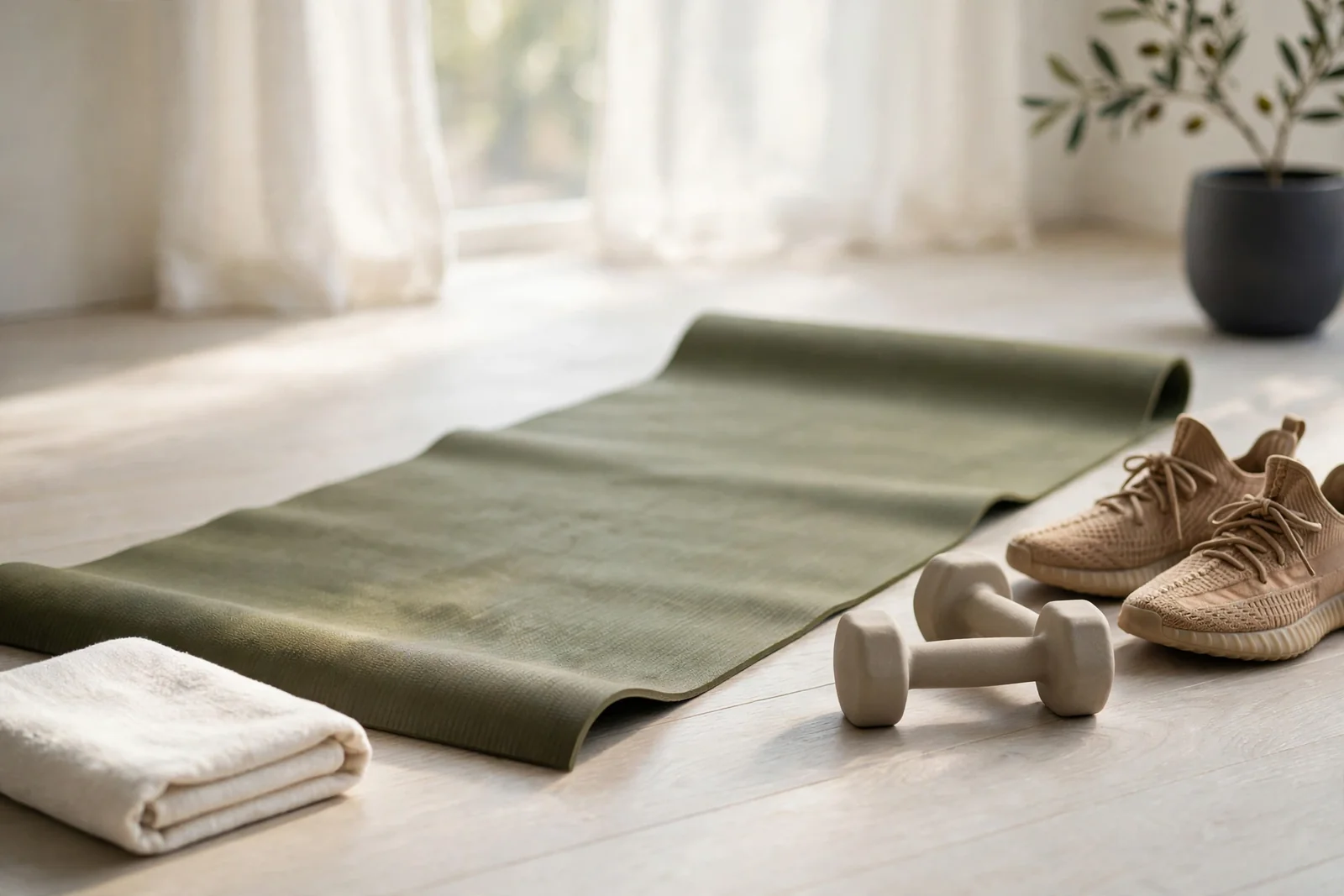
- Add two or three short strength sessions a week. Two 20-minute sessions with light dumbbells or bodyweight moves — squats, wall push-ups, rows — help you carry groceries, climb stairs, and get up off the floor without thinking about it. Do them after breakfast on set days, keep the weights light enough to finish comfortably, and rest a day between sessions.

What to Stop Doing
Skipping breakfast and running on coffee. Coffee is not breakfast, and two cups on an empty stomach will not carry you to lunch. If mornings are too rushed to eat, prep the night before: overnight oats, boiled eggs, or yogurt cups ready in the fridge. The fix is planning, not willpower. A cortisol lowering morning routine replaces coffee-as-breakfast with real food first. Healthline lists good sleep, balanced meals, and regular movement among its natural ways to lower cortisol.
Checking the news in bed. The first thing your brain meets should not be a crisis. News before breakfast raises the day’s tension before you have had a sip of water, and it costs nothing to wait until after breakfast. Your phone can wait; the headlines will still be there at 9 a.m.
Trying to fix everything on Monday. A new routine fails when it asks for ten changes at once. Pick three steps from this guide, do them for one week, and add a fourth only when the first three feel automatic. Slow is not failure — slow is how a routine survives past January.

Your First Week: Start with Three Changes
A calm morning starts the night before. Put the glass by the sink, charge the phone in the kitchen, and lay out your walking shoes. Tomorrow, do three things: ten minutes of light, water before coffee, and a protein breakfast. Do the same three for seven days. If a morning goes sideways — and one will — skip nothing the next day and carry on. By the end of the week you will know which step helped most, and that is the one to keep first. Write the three steps on a card by the kettle so the morning runs itself while the habit is still new. That night-before setup is how a cortisol lowering morning routine sticks past week one.

Frequently Asked Questions
How soon should I eat breakfast after waking up?
Within two hours is a practical target. Start with light and water, take a short walk or stretch, then sit down to a protein-first breakfast. You do not need to eat the minute you wake up, but a long gap before food often means a mid-morning crash and extra snacking.
Is coffee bad for cortisol in the morning?
Coffee itself is not the problem — timing is. Drink a full glass of water first, eat something with protein, and then enjoy your coffee. On an empty stomach, coffee can leave you jittery and wired instead of awake, which makes the morning feel harder than it needs to.
What if I only have 15 minutes in the morning?
Do the smallest version: two minutes of light at the window, a glass of water, and a yogurt cup you prepped the night before. Fifteen calm minutes beat an hour of rushing. Add one more step when the week allows — the routine grows with your schedule, not against it.
Do I need to exercise every morning?
No. Ten gentle minutes of walking or stretching most mornings is enough to start, plus two or three short strength sessions a week. Rest days count too. The goal is steady movement you can repeat, not a daily workout that leaves you dreading the alarm.
What if I still feel exhausted after changing my mornings?
Give the routine two or three steady weeks before judging it — energy shifts slowly. If exhaustion, poor sleep, or low mood persist, talk to your clinician rather than guessing at supplements or pushing harder. A good morning routine supports your health; it does not replace medical care.
Start with one change, not a new life. Pick the step that sounds easiest — light, water, or breakfast — and do it tomorrow morning. Healthy living over 40 is built from small, steady habits, not grand overhauls. The morning that works is the one you will still be doing next month: calm, simple, and yours. Once the morning feels calmer, a simple skincare routine is the next easy win.

